Lenticular Photo Printing: How Restoration Studios Are Creating 3D Keepsakes from Old 2D Photos in 2026
Why Lenticular Printing Is the Revenue Stream Restoration Studios Need in 2026
If your studio's revenue still depends entirely on delivering digital restoration files, you're leaving serious money on the table. Lenticular photo printing — the technology that creates those mesmerizing 3D or animated images using ridged plastic lenses — has dropped dramatically in cost this year, and restoration studios are uniquely positioned to capitalize.
The math is compelling. A lenticular print costs $3–8 to produce at volume, yet clients willingly pay $35–75 for a single 5×7 3D keepsake of a restored family photo. That's a 300–500% margin on a product that feels like magic to the person holding it. Studios adding this service in 2026 report that 20–30% of restoration clients upgrade to a physical lenticular product when shown a sample.
The emotional angle sells itself. When a client brings in a crumbling 1940s portrait of their grandmother and you hand them back a lenticular print where grandma's face seems to shift and breathe with depth — that's not a file on a phone. That's a heirloom.
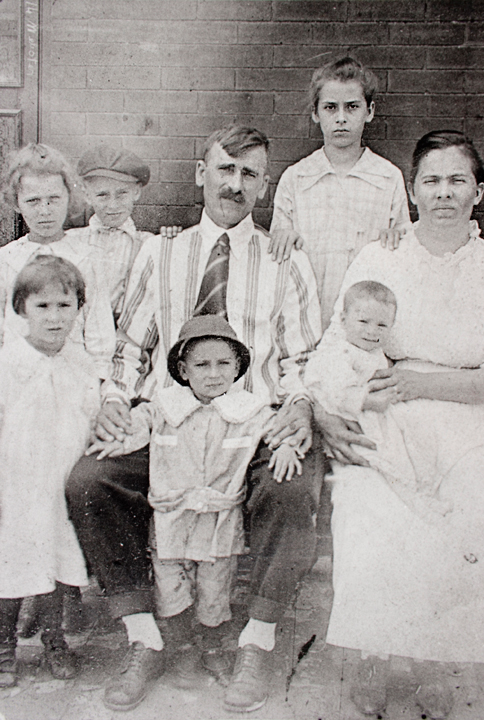
Before Restoration
Faded, grainy, and deteriorated vintage photo

After RestoreGram
Vibrant, clear, and beautifully restored
The Step-by-Step Workflow: From Flat Restoration to 3D Lenticular Print
The process starts where your existing workflow ends — with a clean, high-quality AI restoration. You need a restored image at minimum 300 DPI, free of artifacts, with well-defined subject separation from the background. RestoreGram handles this initial restoration beautifully, giving you the clean foundation lenticular conversion demands.
Step 1: Generate a Depth Map
Use depth estimation tools like Depth Anything V3 or Marigold to generate a grayscale depth map from your restored 2D image. This map tells the lenticular software what's "close" and what's "far." For portraits, manually refine the map — push the background deeper, bring the subject's nose and shoulders forward. Spend 10–15 minutes here; it dramatically affects the final result.
Step 2: Create Multi-Angle Frames
Feed your restored image and depth map into a parallax rendering tool like StereoPhoto Maker or the 3D Photo Inpainting pipeline. Generate 12–20 slightly shifted perspective frames. These frames simulate what a camera would capture if it moved in a small arc around the subject. More frames mean smoother transitions in the final print.
Step 3: Interlace and Print
Import your frame sequence into lenticular interlacing software — SuperFlip and 3DMasterKit are the industry standards. Match the interlacing to your specific lens sheet's LPI (lenses per inch). Most studios use 60–75 LPI sheets for 3D depth effects. Output the interlaced file and either print in-house on a 1440+ DPI inkjet or send to a lenticular print vendor.
Vendor Partnerships and Pricing Strategy
Unless you're processing 500+ prints monthly, outsource production initially. Vendors like Tracer Imaging, Lantor Ltd, and numerous Alibaba-sourced suppliers offer white-label lenticular printing with 5–7 day turnaround. Order sample packs from three vendors before committing — quality varies wildly in lens clarity and color accuracy.
For pricing, use a tiered model. Offer a 4×6 lenticular print at $35 as an easy upsell, a 5×7 at $55, and an 8×10 premium version at $95–120. Bundle the lenticular with your colorization service for a "Complete Heritage Package" at $150+. Clients choosing memorial or estate work rarely blink at these prices.
Marketing This Service to the Right Clients
Your highest-conversion audience is estate families, memorial service planners, and anniversary gift buyers. Display a lenticular sample at your counter or in your studio's waiting area — physical demos convert at 5× the rate of website descriptions.
On your website, create a dedicated product page with a short video showing the lenticular effect in motion. Still images cannot sell this product. When clients submit photos through RestoreGram or your intake process, follow up with a personalized message: "Your restoration is ready — would you like to see this as a 3D keepsake print?"
Studios that treat lenticular printing as a premium product line rather than an afterthought are building sustainable revenue that no AI tool can commoditize. The restoration is the foundation. The lenticular print is the profit.